Zendesk Alternatives (2026)
Compare the top Zendesk alternatives for startups, small businesses, SaaS, and ecommerce. Find help desk software with better pricing and simpler setup.
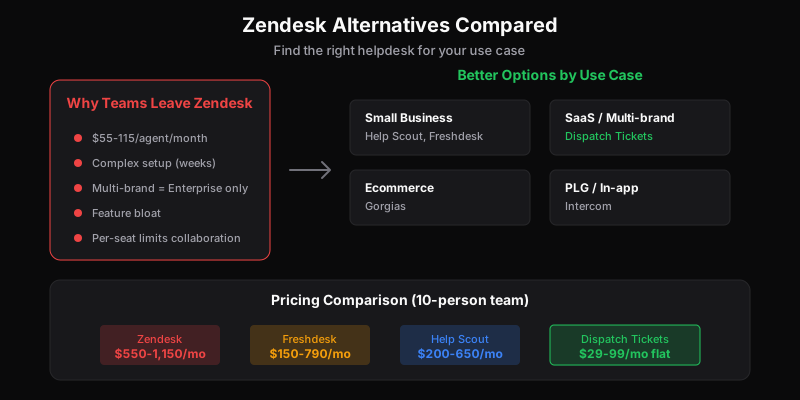
Zendesk is the 800-pound gorilla of customer support software. It’s powerful, it’s everywhere, and for many companies, it’s become frustratingly expensive and complex.
If you’re reading this, you’re probably dealing with one (or more) of these problems:
- Per-seat pricing that punishes collaboration — At $55-115/agent/month, adding your whole team gets expensive fast
- Feature bloat — You’re paying for enterprise features you’ll never use
- Complexity — Simple things take too long to set up
- Multi-brand limitations — Managing multiple brands requires expensive enterprise plans
The good news: there are alternatives that might fit your needs better. The bad news: there are a lot of them, and they’re not all created equal.
This guide breaks down the best Zendesk alternatives by use case, so you can find the right fit without evaluating 50 different tools.
Quick Comparison: Top Zendesk Alternatives
| Tool | Best For | Pricing Model | Starting Price | Multi-brand |
|---|---|---|---|---|
| Freshdesk | SMBs wanting familiar UI | Per-agent | $15/agent/mo | Pro plan+ |
| Help Scout | Small teams, simple needs | Per-user | $20/user/mo | Plus plan+ |
| Intercom | Product-led SaaS | Per-seat + usage | $74/seat/mo | Yes |
| Front | Shared inbox teams | Per-seat | $19/seat/mo | Limited |
| Dispatch Tickets | Multi-brand, API-first | Per-ticket | $29/mo (1k tickets) | All plans |
| Zoho Desk | Budget-conscious teams | Per-agent | $14/agent/mo | Enterprise |
| Gorgias | Ecommerce stores | Per-ticket | $10/mo (50 tickets) | Yes |
| HappyFox | Mid-market companies | Per-agent | $29/agent/mo | Enterprise |
Why Companies Leave Zendesk
Before diving into alternatives, it helps to understand the common pain points driving the search:
1. Pricing That Doesn’t Scale Well
Zendesk’s per-agent pricing starts at $55/agent/month for Suite Team and goes up to $115/agent for Suite Professional. For a team of 10, you’re looking at $550-$1,150/month—and that’s before add-ons.
The real problem isn’t just the cost. It’s that per-agent pricing discourages the kind of cross-functional collaboration that modern teams need. When adding an engineer costs $55/month just so they can see bug reports, something’s broken.
2. Complexity Tax
Zendesk has evolved over 15+ years, adding features for every possible use case. That’s great if you need everything. It’s not great if you need to configure triggers, automations, views, macros, and custom fields just to get started.
Many teams report spending weeks on initial setup, only to discover they’re using 20% of what they’re paying for.
3. Multi-Brand Nightmares
If you run multiple brands, products, or client accounts, Zendesk forces you into expensive enterprise tiers. Even then, the multi-brand experience feels bolted on rather than built in.
4. Support Quality Decline
Ironically, many Zendesk customers complain about Zendesk’s own support. Long response times, canned replies, and the feeling that you’re just a ticket number—not a customer.
Best Zendesk Alternatives by Use Case
Best for Small Businesses: Freshdesk
Why it works: Freshdesk offers a familiar interface (it was literally built to compete with Zendesk) at lower price points. The free tier supports up to 10 agents, making it accessible for small teams.
Pricing: Free for basic; $15-$79/agent/month for paid plans
Pros:
- Lower starting price than Zendesk
- Intuitive interface, easy migration
- Good automation capabilities
- Free tier available
Cons:
- Still per-agent pricing
- Multi-brand requires Pro plan ($49/agent)
- Feature creep—getting complex like Zendesk
- Upsells can be aggressive
Best for: Small businesses with 5-20 agents who want Zendesk-like features at a lower cost.
Read more: Freshdesk Alternatives →
Best for Startups: Help Scout
Why it works: Help Scout keeps things simple. It’s designed for small teams that want to provide great support without wrestling with complex software. The interface is clean, onboarding is fast, and you can be up and running in a day.
Pricing: $20-$65/user/month
Pros:
- Simple, clean interface
- Fast setup (hours, not weeks)
- Great knowledge base (Docs)
- Beacon widget for in-app support
Cons:
- Per-user pricing still adds up
- Limited API capabilities
- No multi-brand on Standard plan
- Basic reporting compared to Zendesk
Best for: Startups under 20 people who value simplicity over features.
Best for SaaS Companies: Dispatch Tickets
Why it works: Built for SaaS teams that need flexibility. Per-ticket pricing means your whole team can access tickets without per-seat costs. Multi-brand support is included on every plan, and the API-first architecture means you can embed support directly into your product.
Pricing: Free (100 tickets/mo); $29/mo (1,000 tickets); $99/mo (10,000 tickets)
Pros:
- Per-ticket pricing (not per-seat)
- Unlimited team members on all plans
- Multi-brand included, not upsold
- API-first—same API powers the dashboard
- Open source customer portal
Cons:
- Newer product (launched 2026)
- Smaller ecosystem than Zendesk
- No phone channel (yet)
Best for: SaaS companies, agencies, and anyone managing multiple brands who wants their whole team involved in support without per-seat costs.
Best for Product-Led Growth: Intercom
Why it works: Intercom pioneered the in-app messaging approach that PLG companies love. If you want to combine support, onboarding, and product tours in one tool, Intercom does it well.
Pricing: Starts at $74/seat/month + usage fees
Pros:
- Best-in-class in-app messaging
- Product tours and onboarding
- Strong automation (Fin AI)
- Modern, sleek interface
Cons:
- Very expensive (seat + usage fees)
- Pricing is unpredictable
- Ticketing is weaker than messaging
- Can feel sales-y
Best for: Well-funded SaaS companies doing product-led growth who need messaging, support, and onboarding in one platform.
Read more: Intercom Alternatives →
Best for Ecommerce: Gorgias
Why it works: Gorgias is built specifically for ecommerce. Deep integrations with Shopify, BigCommerce, and Magento. Agents can see order history, process refunds, and modify orders without leaving the helpdesk.
Pricing: $10-$900/month based on ticket volume
Pros:
- Built for ecommerce workflows
- Deep Shopify/BigCommerce integration
- Order management in the helpdesk
- Per-ticket pricing (volume-based)
Cons:
- Only useful for ecommerce
- Gets expensive at high volume
- Limited for non-ecommerce use cases
Best for: Ecommerce stores (especially Shopify) that want deep integration with their store.
Best for Shared Inbox: Front
Why it works: If your team works out of a shared inbox (support@, team@, etc.) and doesn’t need full ticketing, Front might be enough. It adds collaboration features on top of email without the complexity of a full helpdesk.
Pricing: $19-$99/seat/month
Pros:
- Familiar email interface
- Great for internal collaboration
- Works with existing email
- Good for teams that aren’t “support teams”
Cons:
- Not a full ticketing system
- Per-seat pricing
- Limited reporting
- Multi-brand is clunky
Best for: Teams that need shared inbox collaboration but not full ticketing—like sales teams, agencies, or small ops teams.
Best for Budget: Zoho Desk
Why it works: Zoho Desk offers solid helpdesk features at the lowest price point. If you’re already in the Zoho ecosystem (CRM, Books, etc.), the integrations are seamless.
Pricing: Free for 3 agents; $14-$40/agent/month for paid plans
Pros:
- Very affordable
- Good Zoho ecosystem integration
- Decent feature set for the price
- Self-hosted option available
Cons:
- Interface feels dated
- API is limited
- Support can be slow
- Multi-brand requires Enterprise ($40/agent)
Best for: Budget-conscious teams or companies already using other Zoho products.
Feature Comparison Matrix
| Feature | Zendesk | Freshdesk | Help Scout | Dispatch Tickets | Intercom | Gorgias |
|---|---|---|---|---|---|---|
| Pricing model | Per-agent | Per-agent | Per-user | Per-ticket | Per-seat + usage | Per-ticket |
| Starting price | $55/agent | $15/agent | $20/user | $29/mo flat | $74/seat | $10/mo |
| Free tier | No | Yes (10 agents) | No | Yes (100 tickets) | No | No |
| Multi-brand | Enterprise | Pro+ | Plus+ | All plans | Yes | Yes |
| API quality | Good | Good | Basic | Excellent | Good | Good |
| Setup time | Weeks | Days | Hours | Hours | Days | Hours |
| Best for | Enterprise | SMB | Small teams | SaaS/Multi-brand | PLG SaaS | Ecommerce |
Questions to Ask Before Switching
Before committing to any Zendesk alternative, work through these questions:
1. What’s your actual use case?
- Simple email support? → Help Scout or Front
- Multi-brand/multi-tenant? → Dispatch Tickets
- Ecommerce? → Gorgias
- In-app messaging + support? → Intercom
2. What’s your team size and growth trajectory?
- Per-seat pricing hurts as you scale
- If you want engineers, PMs, and founders to see tickets, per-ticket or flat pricing makes more sense
3. What integrations do you need?
- Deep Shopify integration? → Gorgias
- Part of Zoho ecosystem? → Zoho Desk
- Need to embed in your product? → Dispatch Tickets or Intercom
4. What’s your budget—really?
- Don’t just look at list price
- Calculate total cost: (price × users) + add-ons + overage
- Factor in setup time and training
5. How important is the API?
- Building custom workflows? → Check API docs before committing
- Dispatch Tickets and Intercom have the strongest APIs
- Help Scout and Zoho Desk APIs are more limited
Migration Considerations
Switching from Zendesk isn’t trivial. Here’s what to plan for:
What you can usually migrate:
- Ticket history (most tools have importers)
- Customer data
- Knowledge base articles
- Basic automations
What you might lose:
- Complex automation rules (will need rebuilding)
- Custom apps and integrations
- Historical reporting data
- Specific workflow configurations
Timeline expectations:
- Simple migration (< 10 agents, basic setup): 1-2 weeks
- Medium migration (10-50 agents, some customization): 2-4 weeks
- Complex migration (50+ agents, heavy customization): 1-3 months
The Bottom Line
Zendesk isn’t bad software. It’s just become expensive and complex for teams that don’t need enterprise features.
The best alternative depends on your specific situation:
- Want Zendesk but cheaper? → Freshdesk
- Want simple and fast? → Help Scout
- Want multi-brand without enterprise pricing? → Dispatch Tickets
- Want messaging + support for PLG? → Intercom
- Want ecommerce-specific? → Gorgias
- Want cheapest option? → Zoho Desk
The good news is most of these offer free trials. Test 2-3 options with real tickets before committing.
Related Comparisons
Ready to get started?
Join the waitlist and start building better customer support into your product.
Get Early AccessFrequently Asked Questions
Yes. Freshdesk offers a free tier for up to 10 agents. Dispatch Tickets has a free tier with 100 tickets/month and unlimited users. Zoho Desk offers free for 3 agents. Open source options like osTicket and Zammad are completely free but require self-hosting.
For paid plans, Zoho Desk starts at $14/agent/month. Dispatch Tickets starts at $29/month flat (not per-user) for 1,000 tickets. Gorgias starts at $10/month for 50 tickets. The cheapest option depends on your team size and ticket volume.
Most alternatives offer Zendesk importers or migration assistance. Freshdesk, Help Scout, and Intercom have native Zendesk importers. For others, you can typically export from Zendesk and import via CSV or API. Expect 1-4 weeks for migration depending on complexity.
Help Scout is popular for its simplicity and clean interface. Dispatch Tickets works well if you need multi-brand support or want your whole team (including engineers) to access tickets without per-seat costs. For well-funded startups doing product-led growth, Intercom is common.
Yes. Dispatch Tickets and Gorgias both use per-ticket (or usage-based) pricing rather than per-seat. This means you pay based on support volume, not team size—often saving 80-95% compared to per-seat pricing for teams where multiple roles need access.
Gorgias is purpose-built for ecommerce with deep Shopify, BigCommerce, and Magento integrations. Agents can see orders, process refunds, and modify shipments directly in the helpdesk. Re:amaze is another ecommerce-focused option.