Zendesk Alternatives for Ecommerce
Zendesk wasn't built for ecommerce. Compare alternatives with native Shopify integration, order management, and pricing that fits online stores.
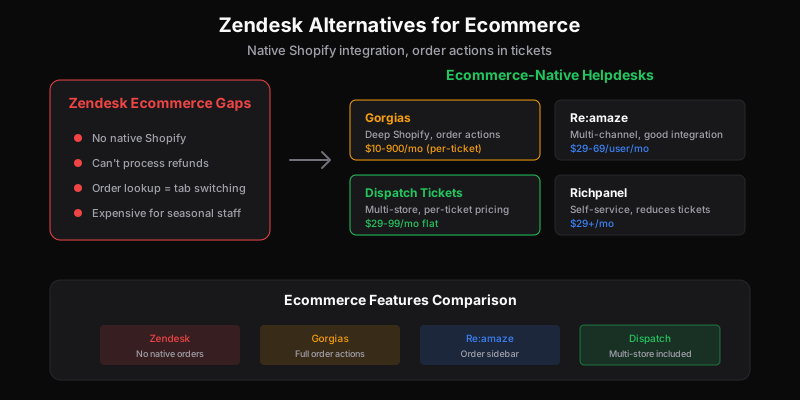
Zendesk can work for ecommerce. But it wasn’t built for it.
Ecommerce support has unique needs: agents need order information, refund capabilities, shipping status. With Zendesk, that requires integrations, apps, and workarounds. With ecommerce-native tools, it’s built in.
If you’re an online store evaluating help desk software, here’s what actually fits.
Why Ecommerce Stores Leave Zendesk
1. No Native Order Integration
When a customer emails “where’s my order?”, your agent needs to:
- Find the customer in Zendesk
- Open Shopify/WooCommerce in another tab
- Search for the order
- Copy relevant information back
With ecommerce-native tools, order info appears automatically. Agents can modify orders, process refunds, and check shipping without leaving the helpdesk.
2. Per-Agent Pricing Doesn’t Fit Seasonal Business
Ecommerce is seasonal. You need 3 support people in January, 10 in November-December. Zendesk’s per-agent pricing means paying full price for agents you only need 2 months per year.
3. Generic When You Need Specific
Zendesk handles “tickets” generically. Ecommerce needs:
- Order status as a ticket field
- Refund workflows built-in
- Return label generation
- Shipping carrier integration
- Revenue tracking per customer
These require Zendesk apps, custom development, or workarounds.
Best Zendesk Alternatives for Ecommerce
1. Gorgias — Best for Shopify Stores
Why it works: Gorgias was built for ecommerce. Deep Shopify integration means agents see order history, can process refunds, edit orders, and create return labels—all without leaving the helpdesk.
Pricing: $10/month (50 tickets) to $900/month (5,000 tickets)
Ecommerce fit:
- Native Shopify, BigCommerce, Magento integration
- Order actions directly in tickets (refund, cancel, modify)
- Macros can pull order data automatically
- Revenue attribution and tracking
- Per-ticket pricing matches seasonal volume
Watch out for:
- Expensive at high volume ($900 for 5k tickets)
- Only useful for ecommerce
- Chat/social can add extra costs
Best for: Shopify stores doing $1M+ in revenue that need deep order integration and can justify the cost.
2. Re:amaze — Best for Multi-Channel Ecommerce
Why it works: Re:amaze combines live chat, email, social, and SMS with ecommerce integrations. Good for stores that support customers across many channels.
Pricing: $29/user/month (Basic) to $69/user/month (Plus)
Ecommerce fit:
- Shopify, BigCommerce, WooCommerce integration
- Order info in sidebar
- Multi-channel (email, chat, social, SMS)
- FAQ/knowledge base included
- Automation and workflows
Watch out for:
- Per-user pricing (less flexible for seasonal)
- Integration depth not as deep as Gorgias
- Interface can feel busy
Best for: Multi-channel ecommerce brands that need chat, social, and email in one place.
3. Dispatch Tickets — Best for Multi-Brand Ecommerce
Why it works: If you run multiple storefronts or brands, Dispatch Tickets includes multi-brand on every plan. Per-ticket pricing works well for seasonal businesses—pay for volume, not seats.
Pricing: Free (100 tickets/month), $29/month (1,000 tickets), $99/month (10,000 tickets)
Ecommerce fit:
- Multi-brand/multi-store on all plans
- Per-ticket = seasonal flexibility
- Unlimited users (whole team can help during rush)
- API for custom order integrations
- Open source portal for branded support
Watch out for:
- No native Shopify app (requires API integration)
- Newer product (launched 2026)
- Order management requires custom work
Best for: Multi-brand ecommerce, agencies managing multiple stores, or stores that want full customization through API.
4. Richpanel — Best for Self-Service
Why it works: Richpanel focuses on customer self-service for ecommerce. Customers can track orders, initiate returns, and resolve common issues without contacting support.
Pricing: $29/month (100 conversations) to custom enterprise pricing
Ecommerce fit:
- Customer self-service portal
- Order tracking built-in
- Return initiation without agent
- Reduces ticket volume significantly
- Shopify and WooCommerce integration
Watch out for:
- Per-conversation pricing can add up
- Less focus on agent experience
- Smaller company (risk consideration)
Best for: Stores with high volume of “where’s my order?” and return requests that want to automate common queries.
5. eDesk — Best for Marketplace Sellers
Why it works: If you sell on Amazon, eBay, Walmart, and your own site, eDesk centralizes all support in one inbox with native marketplace integrations.
Pricing: From $85/month based on channels and volume
Ecommerce fit:
- Amazon, eBay, Walmart, Etsy integrations
- Order data from all marketplaces
- SLA tracking for marketplace requirements
- Feedback and review management
- Multi-channel centralization
Watch out for:
- Complex pricing model
- Overkill for single-channel stores
- Less flexible than pure helpdesks
Best for: Sellers on multiple marketplaces who need to centralize support and meet marketplace SLA requirements.
Comparison Table
| Tool | Best For | Pricing Model | Shopify Native | Multi-brand | Order Actions |
|---|---|---|---|---|---|
| Gorgias | Shopify stores | Per-ticket | Deep | Yes | Full |
| Re:amaze | Multi-channel | Per-user | Good | Yes | Basic |
| Dispatch Tickets | Multi-brand | Per-ticket | API only | All plans | Via API |
| Richpanel | Self-service | Per-conversation | Good | Yes | Customer-facing |
| eDesk | Marketplaces | Volume-based | Good | Yes | Yes |
Key Questions for Ecommerce
What platform are you on?
- Shopify → Gorgias or Re:amaze have deepest integration
- WooCommerce → Re:amaze or Gorgias
- Custom/headless → Dispatch Tickets (API-first)
- Marketplaces → eDesk
What’s your volume pattern?
- Steady year-round → Per-user pricing is fine
- Seasonal spikes → Per-ticket pricing (Gorgias, Dispatch Tickets) is better
How many brands/stores?
- Single store → Any tool works
- Multiple stores → Dispatch Tickets (included) or pay premium tiers elsewhere
What channels matter?
- Email + chat → Most tools cover this
- Social DMs → Gorgias, Re:amaze
- Marketplaces → eDesk
The Bottom Line
Zendesk can work for ecommerce with enough apps and configuration. But you’re fighting the tool instead of working with it.
Choose based on your situation:
- Shopify + high volume → Gorgias
- Multi-channel brand → Re:amaze
- Multiple stores/brands → Dispatch Tickets
- High self-service potential → Richpanel
- Marketplace seller → eDesk
Test with real orders and real customer tickets before committing.
Related
Ready to get started?
Join the waitlist and start building better customer support into your product.
Get Early AccessFrequently Asked Questions
Gorgias is the gold standard for Shopify with deep native integration—agents can see orders, process refunds, and modify shipments directly in tickets. Re:amaze is a solid alternative. Dispatch Tickets works well for multi-store operations.
Yes, with ecommerce-native tools. Gorgias lets you process refunds, cancel orders, and generate return labels without leaving the ticket. Zendesk and Freshdesk require switching to Shopify admin for these actions.
Per-ticket pricing handles seasonal swings better than per-seat. Gorgias and Dispatch Tickets both use this model. You pay for actual support volume rather than maintaining full-price seats during slow months.
Under 20-30 orders per day, you might manage with email. Once you're handling WISMO ('where is my order?') questions regularly, a help desk with order integration saves significant time and improves customer experience.