Omnichannel Support: Myth vs Reality
The promise of seamless multi-channel support rarely matches reality. Here's what actually works for most teams.
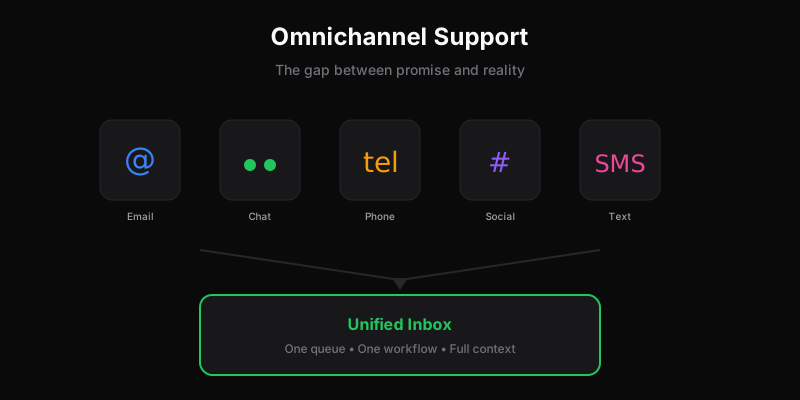
Everyone talks about omnichannel support like it’s table stakes. The pitch sounds compelling: customers reach you on any channel—email, chat, social, phone—and agents see one unified conversation. Seamless. Magical.
The reality? I’ve watched dozens of teams chase the omnichannel dream and end up with expensive software they barely use, conversations fragmented across dashboards, and agents constantly context-switching.
Let me be honest about what actually works.
The Omnichannel Promise
Vendors sell a beautiful vision:
- Customer tweets at you, then emails, then calls—agent sees the whole history
- Switch channels mid-conversation without losing context
- Meet customers wherever they are
- One queue, one workflow, one dashboard
It sounds like the obvious right answer. Who wouldn’t want this?
The Omnichannel Reality
Here’s what usually happens:
Most tickets still come through 1-2 channels. After implementing omnichannel, teams discover 80% of volume is still email. Maybe 15% is chat. The other channels? A trickle that didn’t justify the complexity.
Channel-switching is rare. That scenario where someone tweets then emails then calls? It’s the exception, not the rule. Most customers pick a channel and stick with it.
Each channel has different expectations. Chat needs instant response. Email can wait hours. Twitter expects something in between. Treating them identically creates problems—slow chat kills satisfaction, rushed email creates errors.
Agent skills differ by channel. Great email writers aren’t always great on chat. Phone skills are different from written communication. Universal queues don’t account for this.
The unified view doesn’t exist. In practice, platforms have separate interfaces for each channel. The “unified” view is often just a timeline that’s harder to scan than separate inboxes.
What Actually Works
Instead of chasing omnichannel, focus on channel excellence.
Master Your Primary Channel First
If email is 80% of volume, make your email support excellent before adding chat. Most teams try to do everything adequately instead of one thing well.
Questions to ask:
- What’s your average response time? Can you get it under 2 hours?
- What’s your resolution rate? Are tickets bouncing between agents?
- What’s your satisfaction score? Is it above 95%?
If these numbers aren’t great, adding channels won’t help—it’ll spread problems across more surfaces.
Add Channels Deliberately
Each channel has a cost:
- Implementation and training
- Staffing (chat needs dedicated agents during hours)
- Quality monitoring
- Tool complexity
Add channels when customers demand them AND you can staff them well. Not because your competitor has chat.
Real example: A 10-person ecommerce brand added live chat because “everyone has it.” Result: agents constantly interrupted mid-email to handle chat, both channels got slower, satisfaction dropped. They removed chat and satisfaction recovered.
Accept That Some Channels Are One-Way
Twitter/X and Facebook don’t need to be support channels. Many teams use them for monitoring—catch mentions, route legitimate issues to email—without trying to resolve everything in-channel.
It’s okay to DM someone: “Thanks for reaching out. Our support team can help at [email protected].” Not every channel needs full support capability.
Link Conversations, Don’t Merge Them
Instead of one unified queue, link related conversations. When an email comes in, check if the customer has recent chat history. Surface that context without forcing everything into one workflow.
This gives agents context without the complexity of true omnichannel. Dispatch Tickets does this through custom fields that link conversations by customer ID—agents see history without artificial channel merging.
When Omnichannel Actually Makes Sense
Omnichannel can work for:
High-touch enterprise support. When you’re supporting Fortune 500 accounts with dedicated success managers, unified history matters because the same 3-5 people talk across channels.
Call centers doing sales and support. If phone is primary and customers regularly have ongoing relationships with agents, channel unification adds value.
Ecommerce with heavy social presence. Brands where Instagram DMs generate real volume might need social and email unified.
But notice: these are specific situations, not universal requirements.
The Multi-Brand Alternative
Here’s what I recommend instead of omnichannel:
Channel-specific queues with customer context. Keep email in one queue, chat in another, but pull customer history from your CRM/database. Agents get context without forced unification.
Multi-brand support for channel separation. Use separate brands/workspaces for different support types. High-touch accounts get one brand. Self-service volume gets another. This is often cleaner than one omnichannel mess.
API integration instead of platform consolidation. Instead of one platform doing everything poorly, use best-of-breed tools connected via API. Your email tool talks to your CRM talks to your ticketing. Data flows without artificial unification.
Dispatch Tickets is built for this—API-first means you connect what makes sense rather than buying a platform’s entire stack.
The Honest Assessment
Omnichannel support is a solved problem for enterprise with enterprise budgets and enterprise complexity tolerance.
For everyone else—startups, SMBs, growing companies—channel excellence beats channel ubiquity. Do fewer things well instead of everything adequately.
If you’re evaluating omnichannel platforms, ask yourself:
- What percentage of my volume will actually use multiple channels?
- Can I staff each channel properly, or will adding channels dilute quality?
- Am I solving a real problem or chasing what competitors have?
The answer often points toward simplicity, not omnichannel.
Related
Ready to get started?
Join the waitlist and start building better customer support into your product.
Get Early AccessFrequently Asked Questions
For most businesses, no. The promise of seamless cross-channel conversations rarely matches reality. Most tickets still come through 1-2 channels, customers rarely switch channels mid-conversation, and each channel has different expectations. Focus on channel excellence instead—do fewer things well rather than everything adequately.
Omnichannel support means customers can reach you through any channel (email, chat, phone, social, SMS) and agents see a unified conversation history. In theory, a customer who tweets then emails sees continuity. In practice, most teams find 80% of volume comes through 1-2 channels, making the complexity unnecessary.
Omnichannel works for: high-touch enterprise support with dedicated success managers, call centers doing sales and support where phone is primary, and ecommerce brands with heavy social presence generating real DM volume. For everyone else, channel excellence beats channel ubiquity.
Master your primary channel first before adding others. Use channel-specific queues with customer context pulled from your CRM. Link related conversations without forcing artificial unification. Add channels deliberately when customers demand them AND you can staff them well—not because competitors have them.